Your bookkeeper has coded the same software subscription to the same expense account every month for three years. This month, they will do it again. So will every other bookkeeper at your firm, for every client with that vendor.
Repetitive categorization is the most common complaint in bookkeeping, and the most fixable. The problem is not that the work is hard. It is that the system forgets every decision your team has already made. This post explains why that happens, why "just add AI" is only half the answer, and how ZiePieBooks lets your own approvals do the routine coding.
Key Takeaways:
- Most transactions in a month look like transactions your firm has already approved. Recoding them by hand is wasted effort.
- Bank rules help, but they are maintained by hand and live per client, so they drift and break.
- AI on every line is the wrong fix. It guesses at things you already know, and confident guesses are hard to spot when they are wrong.
- ZiePieBooks checks your firm's approved history first, then sends only the true unknowns to AI, each with a confidence score.
- Nothing posts until a person approves it, and when no account fits, a new one is suggested instead of forcing a bad match.
Why the Same Lines Keep Coming Back
In a typical small business, a large share of each month's transactions repeat: rent, payroll, utilities, software, card processing fees, the same handful of suppliers. The descriptions are nearly identical every month. The right account was decided long ago.
Yet many bookkeeping workflows treat every month as new. The feed comes in, the rows are uncategorized, and someone works down the list. The decisions your team made last month are not used as evidence this month.
Why bank rules do not fully fix it
Bank rules were the first answer to this. They work, until they do not. They have to be written by hand, one at a time, per client. Nobody maintains them, so they pile up and contradict each other. And a rule written for one client does not help the next client with the same vendor.
Why "AI on everything" is not the fix either
The newer answer is to send every transaction to an AI model. That helps with volume, but it creates two problems. First, the model is guessing at transactions you already know the answer to. Second, a model that answers every line with confidence makes its wrong answers harder to see. A bookkeeper scanning a hundred plausible suggestions will miss the three that are wrong.
A Better Order of Operations
The right approach uses each tool for what it is good at:
- Firm history first. If your team has approved this description before, apply the same account. That is not a guess. It is your own decision, reused.
- AI only for the unknowns. Send only the genuinely new descriptions to the model, and ask it how confident it is.
- Separate confident from doubtful. Put high-confidence suggestions in one band and low-confidence ones in another, so review effort goes where it is needed.
- A person approves before anything posts. AI proposes. Your team decides.
How ZiePieBooks Solves It
ZiePieBooks follows that order exactly. Imported rows never go straight to the ledger. They land in staging, where the categorization run does its work and waits for a person.
Staging: grouped, history-matched, and scored
The run groups identical descriptions, so twenty identical payouts are one decision rather than twenty. It applies the rules your approvals have already taught it. Only the unknowns go to the model, which answers with a confidence score.
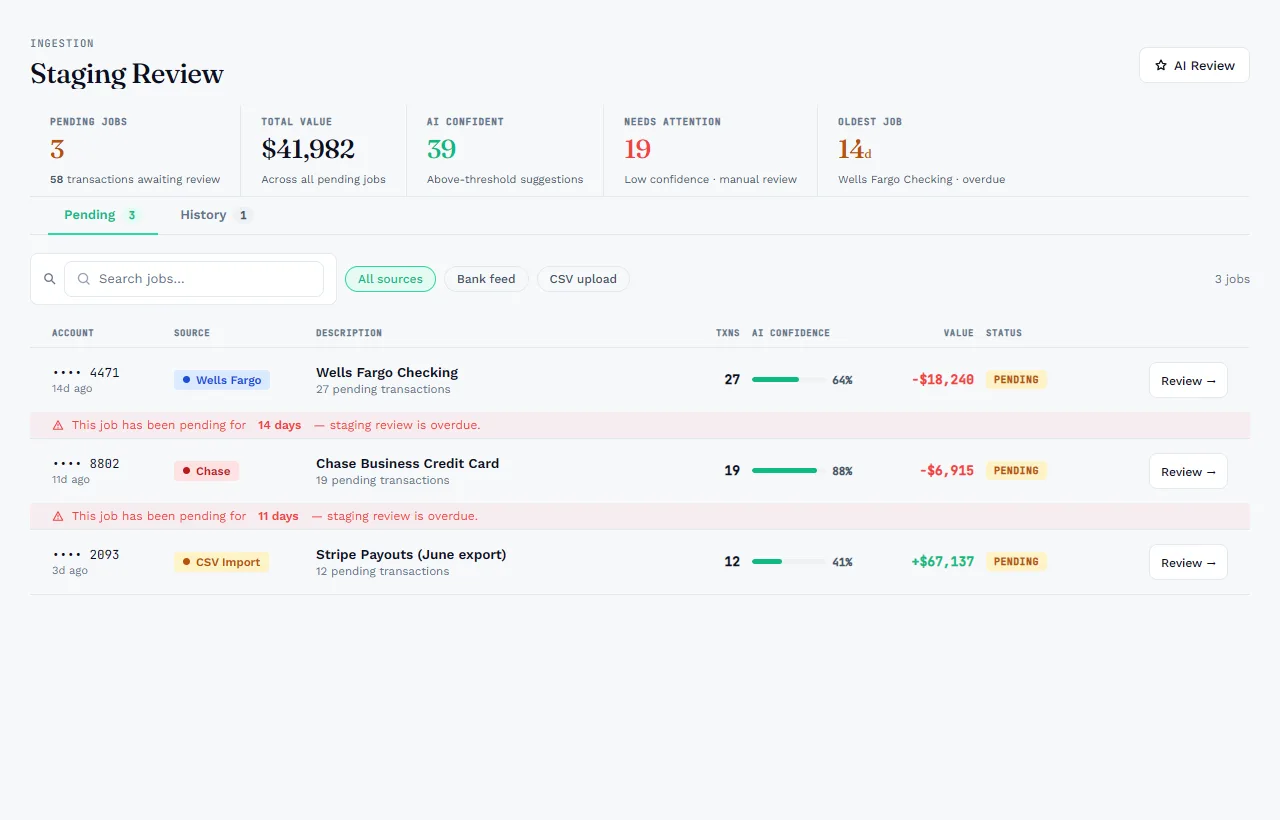
The screen above shows how that reads in practice. Of 58 transactions waiting, 39 are above the confidence threshold and 19 need manual attention. Each job shows its average confidence, so a 41% CSV import gets a closer look than an 88% card feed. Jobs that have sat too long are flagged overdue, so staging cannot quietly become a backlog.
When nothing on the chart fits
A bad categorization is often a sign that the right account does not exist. Many tools force the nearest match anyway. ZiePieBooks lets the reviewer, or the client, suggest a new account instead.
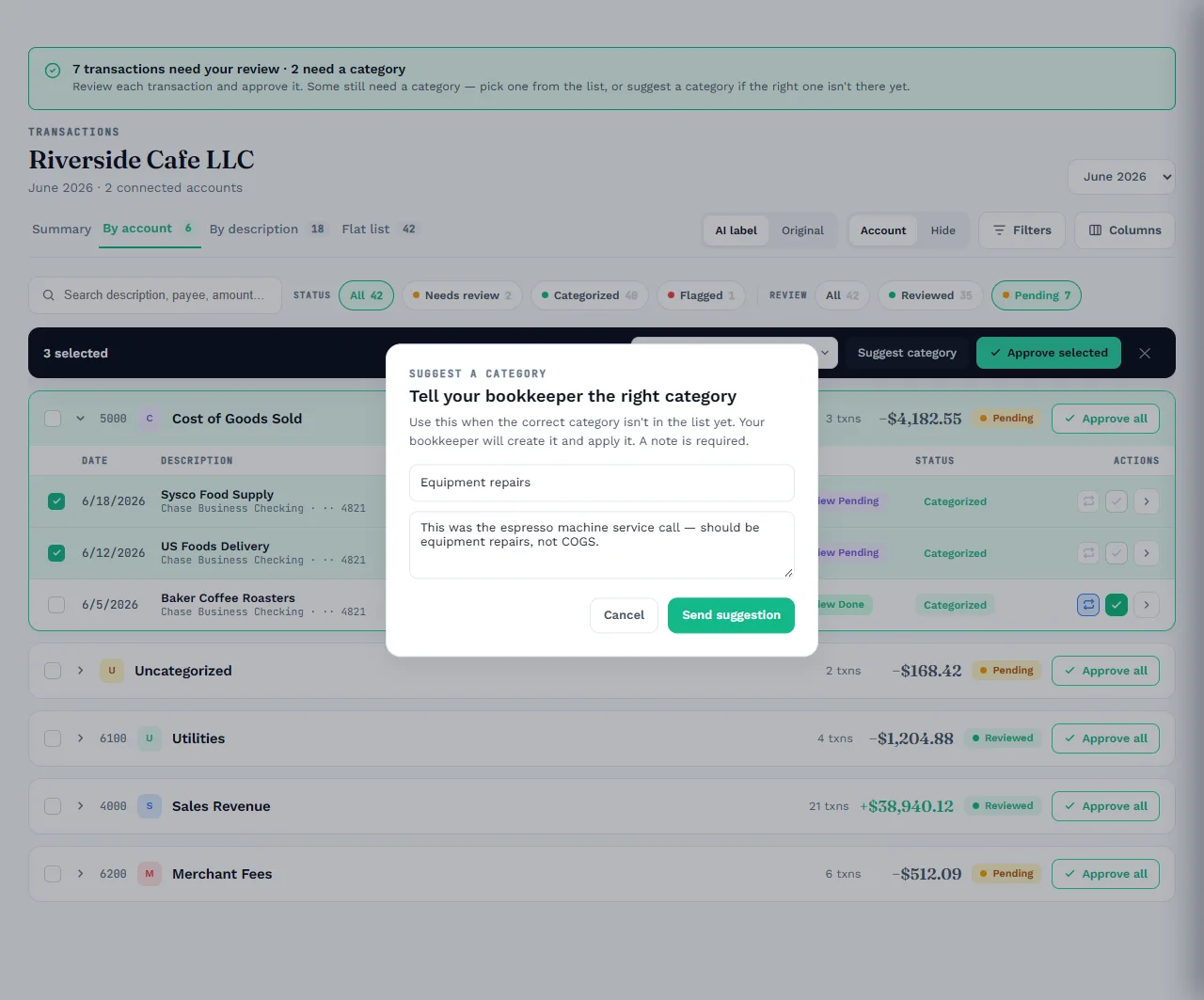
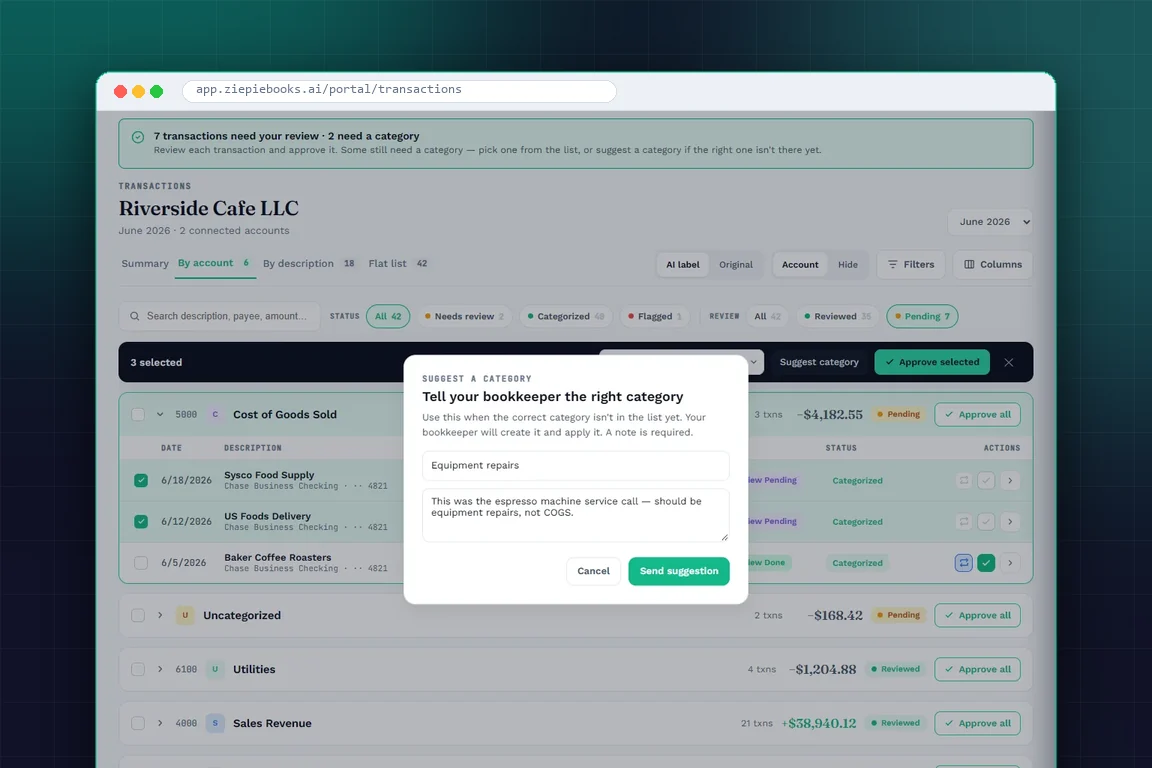
In this example, the client of a cafe spots that an equipment service call was coded to Cost of Goods Sold. They suggest an Equipment Repairs account with a note explaining why. The suggestion returns to the firm's queue. The bookkeeper creates the account and applies it, and the next time that vendor appears, history knows the answer.
Consistent charts make history work across clients
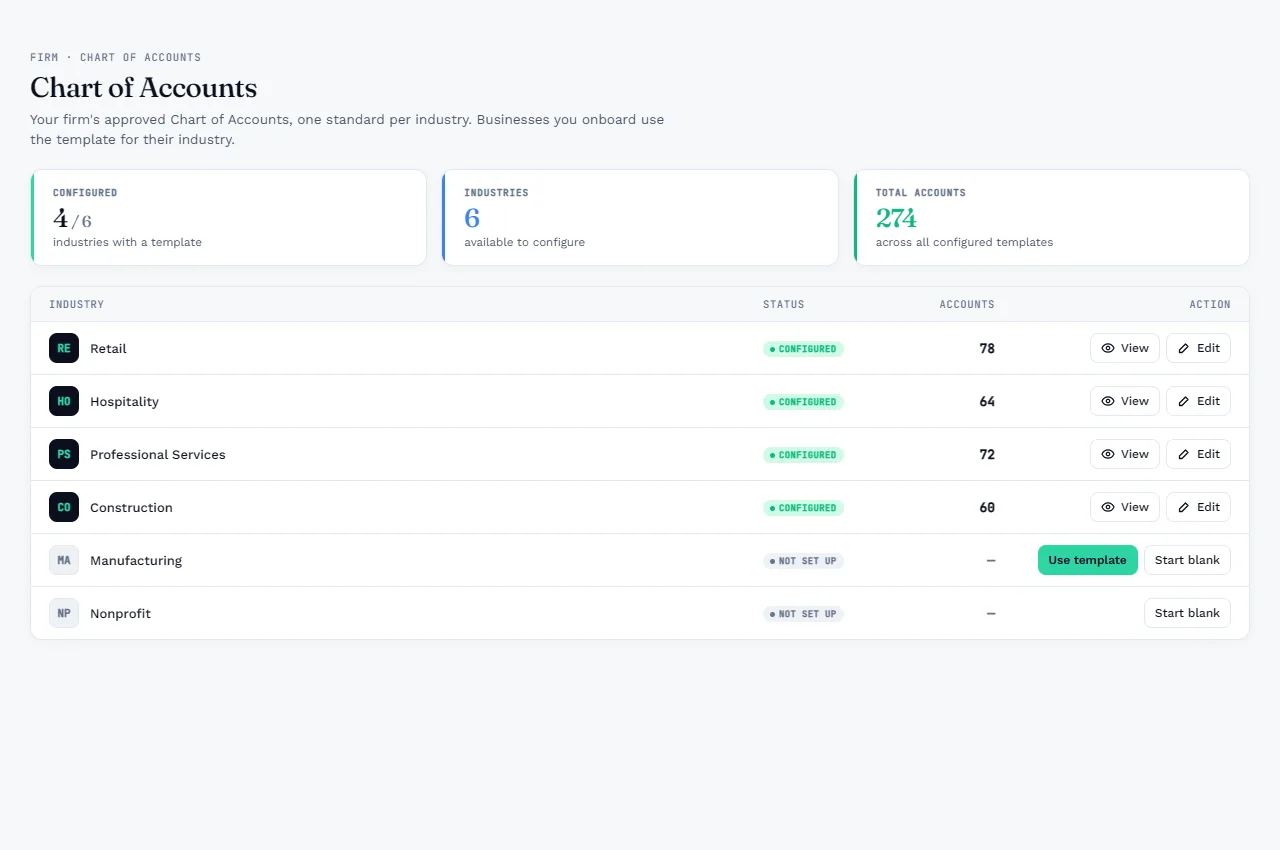
History-first categorization is strongest when clients share account names. ZiePieBooks holds your chart of accounts once per industry as a firm template. Every business you onboard starts from the template for its industry, so coding stays consistent and the AI learns from the same account names.
How to Cut Repetitive Coding at Your Firm
- Standardize charts by industry. Your approvals cannot help other clients if every client names accounts differently.
- Treat every approval as training. Approve carefully in the first months. Those decisions do the routine coding later.
- Review by confidence, not by date. Spend your time on the low-confidence band and spot-check the high one.
- Let clients answer what only they know. Release questionable rows to the client with the proposed category, and let them correct or suggest.
- Never let AI post directly. Staging plus a human approval is what keeps fast categorization defensible.
Let your own approvals do the routine work
Try ZiePieBooks free for 30 days, including history-first and AI categorization. Create your free account or see how staging and review work.
Frequently Asked Questions
What is history-first categorization?
+
History-first categorization checks a transaction against descriptions your firm has already approved and applies the same account. Only transactions with no approved history are sent to an AI model for a suggestion.
Does AI categorization post straight to the ledger in ZiePieBooks?
+
No. Imported rows land in staging, never straight in the ledger. Confident suggestions and doubtful ones are separated, each carries a confidence score, and nothing posts until a person approves it.
What happens when the right account does not exist yet?
+
Rather than forcing a bad match, the client or reviewer can suggest a new account with a note explaining why. The suggestion goes back to the bookkeeper, who creates the account and applies it.